Symmetry Worksheets
Find here a variety of free printable symmetry worksheets. These worksheets will help you test your knowledge of line symmetry and rotational symmetry.
Types of symmetry worksheets you can make
Line symmetry:
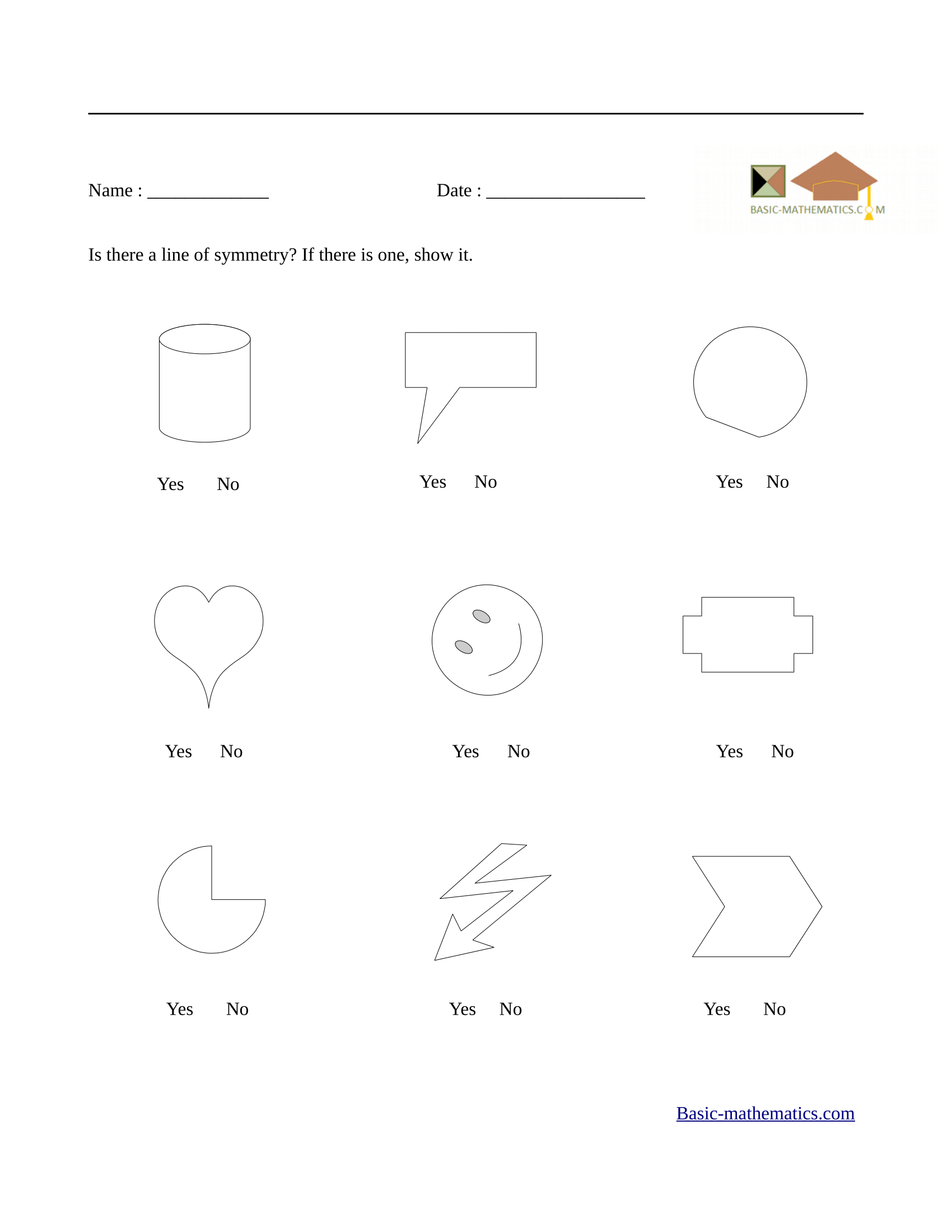
- Is it a line of symmetry?: a dashed line is drawn on each figure, and students circle Yes or No. This includes common traps, like the diagonal of a rectangle.
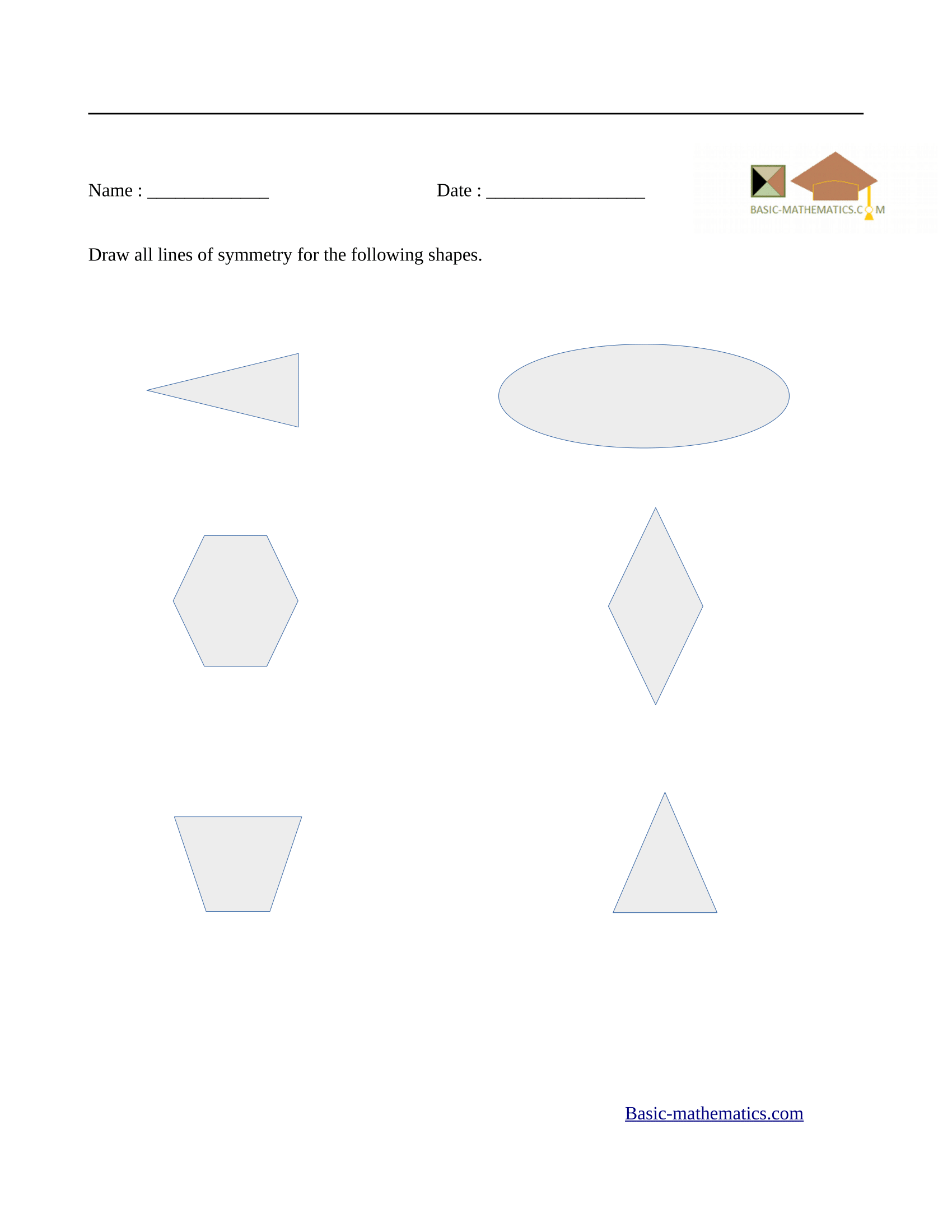
- Draw and count the lines of symmetry: students draw every line of symmetry and write how many there are. Some figures have none, and a circle has infinitely many.
Rotational symmetry:
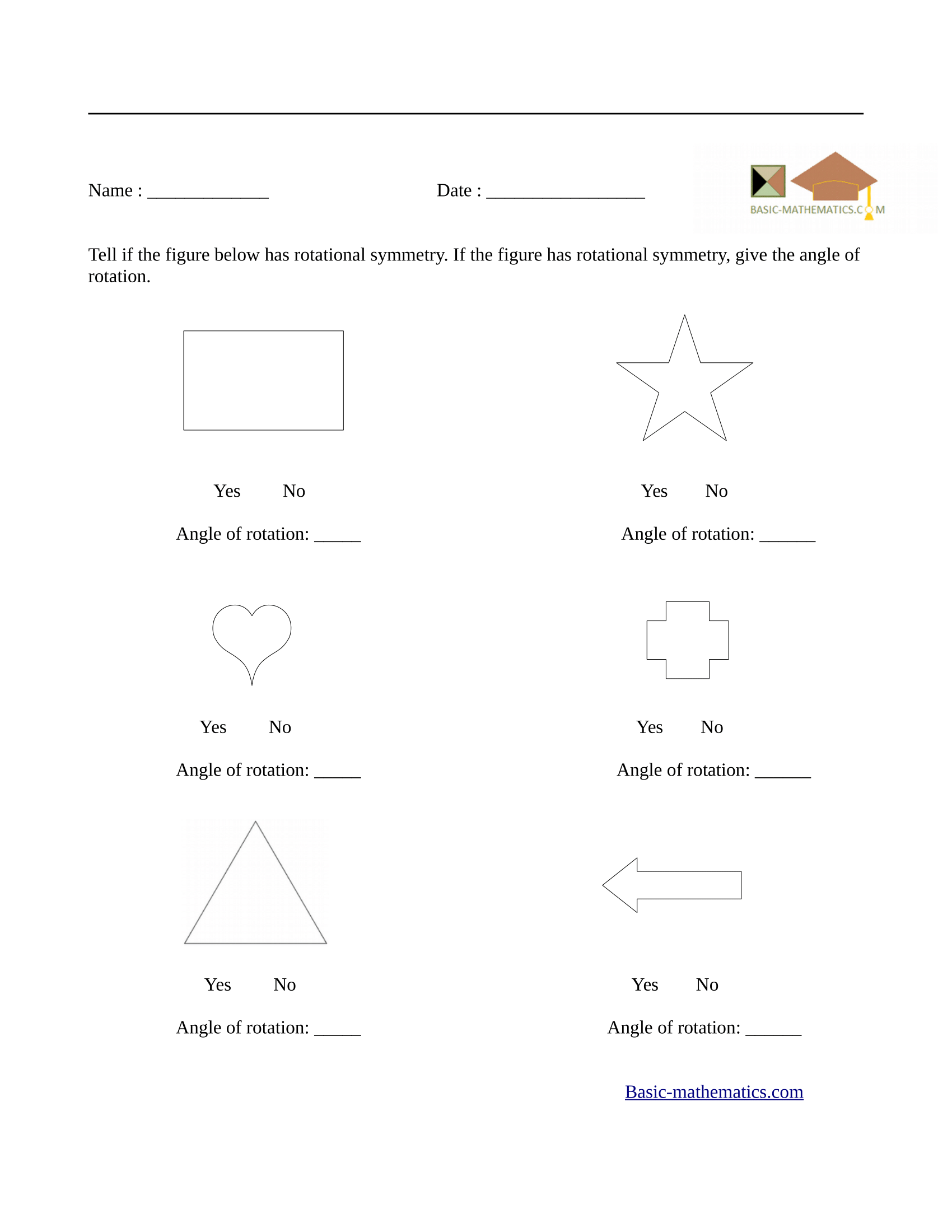
- Rotational symmetry: write the order of rotational symmetry and the smallest angle of rotation, like 360° ÷ 5 = 72°, or “none” when a figure only looks the same after a full turn
- Line and rotational symmetry: find both for each figure on the same worksheet
On grid paper:
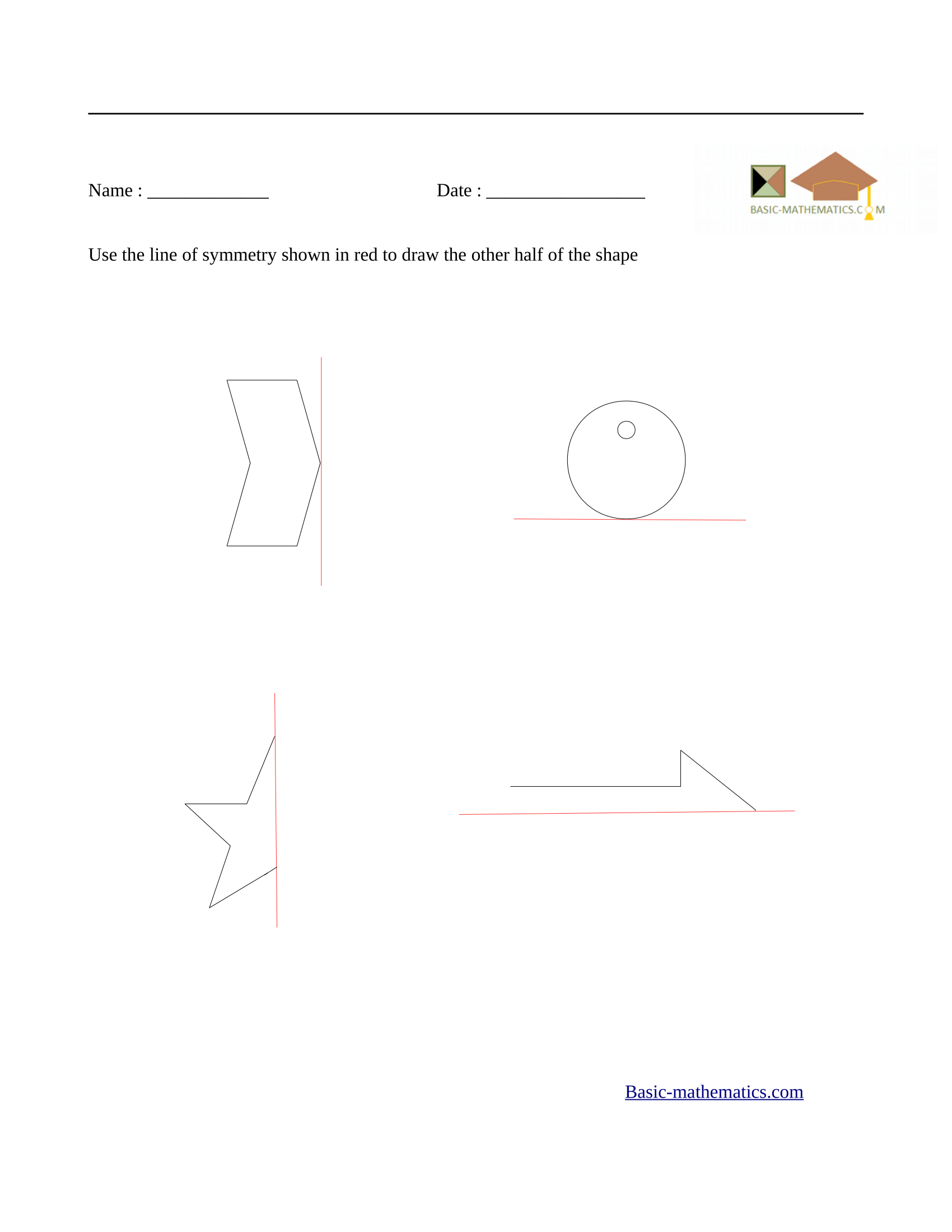
- Complete the symmetric picture: shade squares on the other side of the dashed line to finish the picture
- Reflect a shape across a line: reflect a shape that sits away from the mirror line, keeping each square the same distance from the line
Choose the figures:
- polygons: triangles, squares, rectangles, rhombuses, parallelograms, kites, trapezoids, and regular pentagons, hexagons and octagons
- everyday shapes: stars, a plus sign, an arrow, a heart, a circle, a semicircle, pinwheels and a lightning bolt
- capital letters, like A, H, N, S and Z
- shapes and letters mixed
Make each worksheet your own:
- some shapes are turned, so they aren’t always standing upright
- on grid paper, choose a vertical, horizontal or diagonal line of symmetry, or a mix
- choose an 8 by 8 grid (easier) or a 12 by 12 grid
- choose how many problems to include, from 4 to 16
- colorful pictures, or turn the colors off to save ink
- every worksheet comes with an answer key, with the lines of symmetry drawn in red and the missing squares shaded in
Tips:
A figure has line symmetry if one half of the figure is a mirror image of its other half
A figure has rotational symmetry If the figure is its own image for a rotation of 180 degrees or less.